
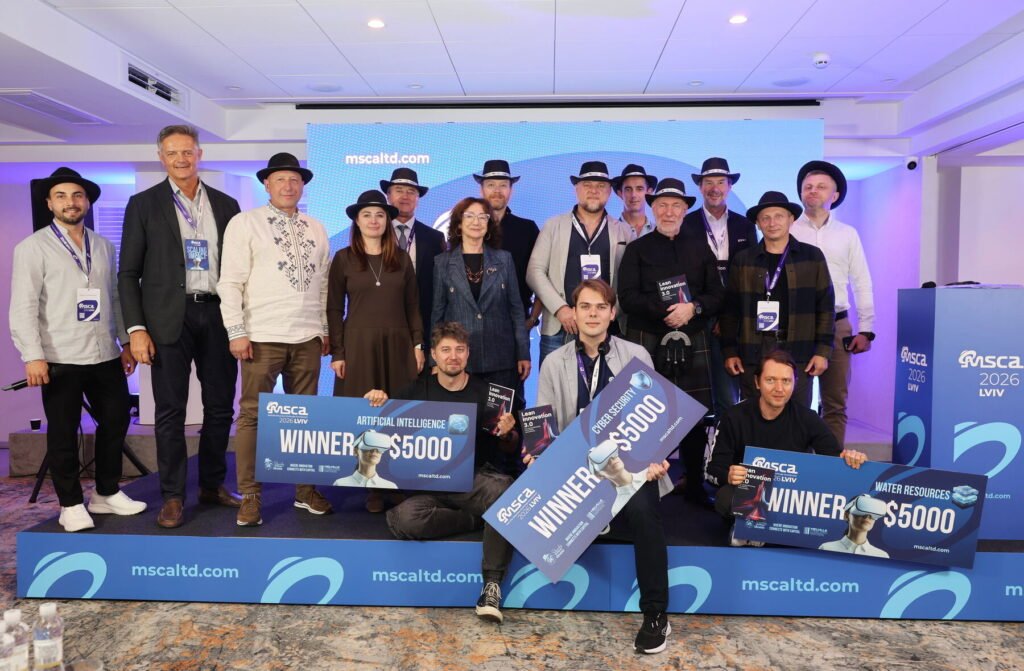
Over two days, 29–30 September, Lviv hosted the final of the Melville Sikorsky Challenge Accelerator international competition. 35 teams competed across three tracks: artificial intelligence, cyber security and water technologies. Three winners will each receive UAH 224,000 ($5,000) to develop their projects, and three more teams received grant offers in the post-competition period. The total prize fund is nearly UAH 700,000.
Finalists presented their developments to the jury, entrepreneurs and investors. Each team had five minutes to pitch, followed by questions from experts and participants in the Startup Crossroads format. The teams were at different stages: some had already patented their solutions and built a large customer base, while others are only preparing to enter the market.
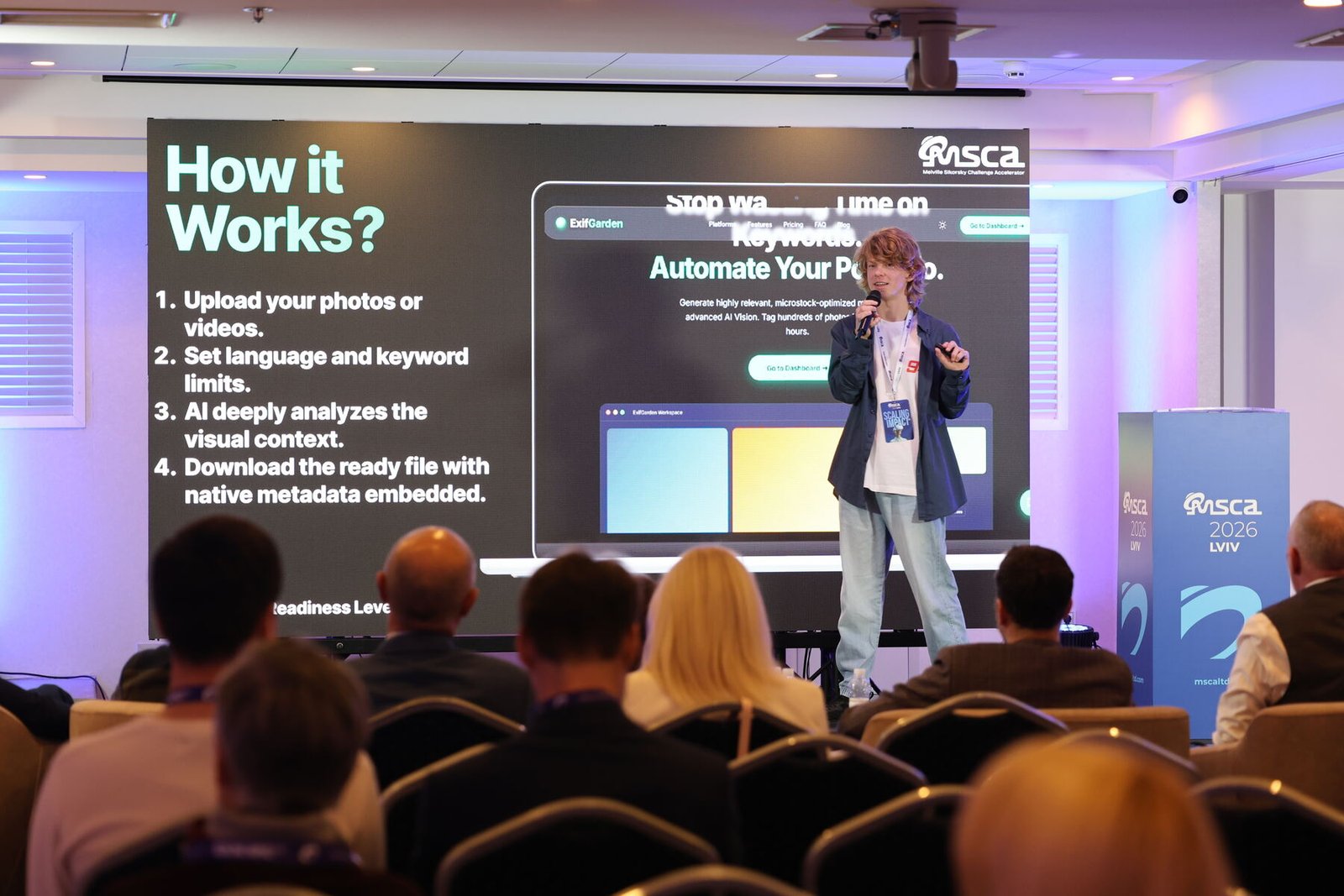
Beyond the winning ideas, two days of pitching showed the jury and guests plenty of other notable projects. A team from Odesa presented a service that automatically writes descriptions for photographers selling images on stock platforms, saving dozens of hours a month. Another startup proposed an app that "dresses" any model in a brand's clothing without a photoshoot: the business needs no photographer, model, equipment or location, only the garments themselves. A third team showed a solution for corporations that tracks what data employees pass to free versions of AI tools and warns of possible leaks of confidential information.
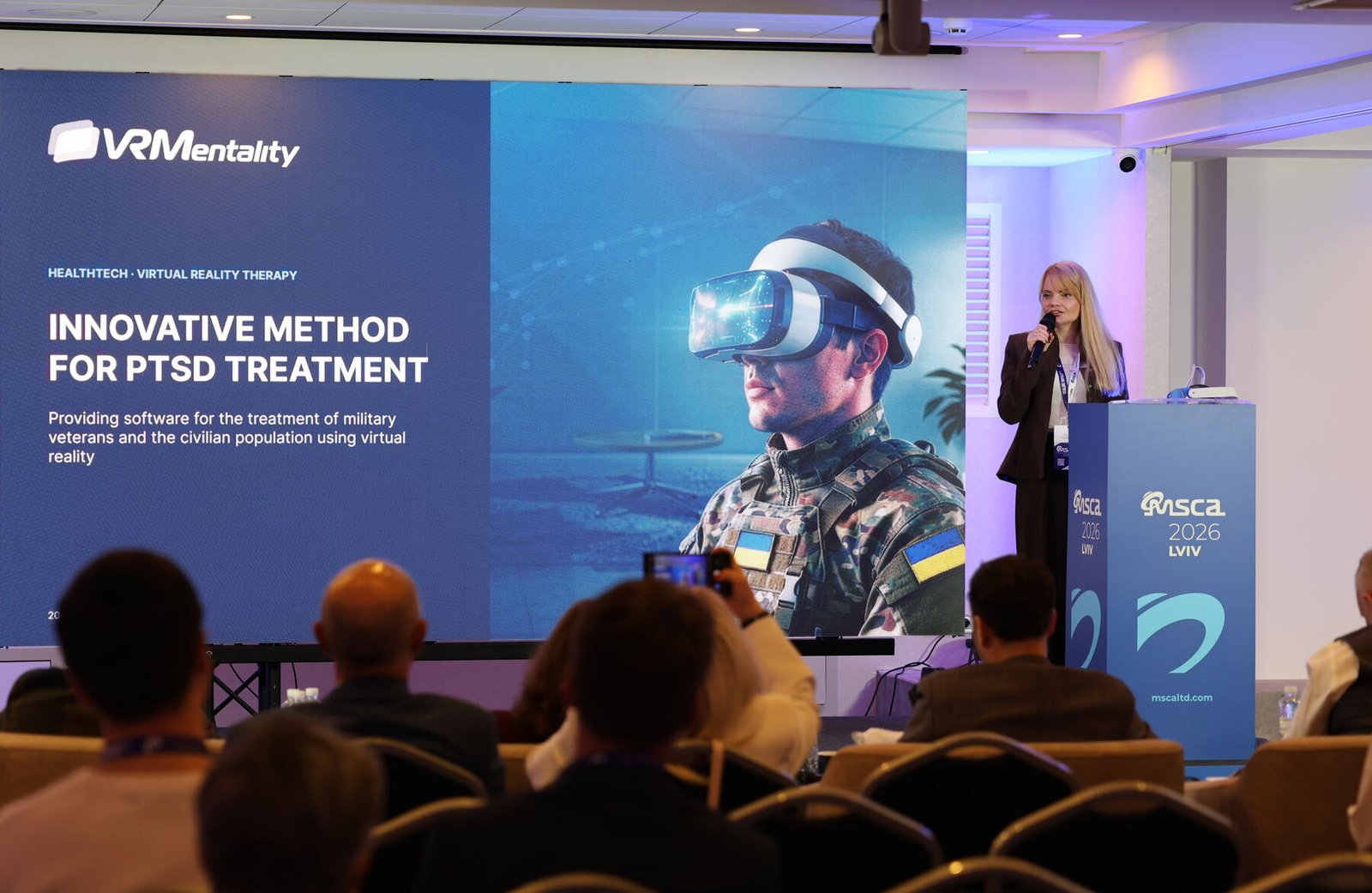
Still, most projects focused on military applications and cyber security. VR Mentality, for example, presented a platform that uses virtual reality and artificial intelligence to treat PTSD and anxiety disorders in patients who do not remember what triggered the condition. According to the team, in a study of 60 veterans, PTSD symptoms fell by 70% after 6–10 VR sessions.
"I decided to invest in their ideas"
Stuart Ford, Scottish investor and co-founder of the Melville Sikorsky Challenge Accelerator, judged the competition for the second time. Since the start of the full-scale invasion he has been helping Ukraine with vehicles: his Jeeps for Peace initiative has already delivered more than 800 vehicles to the Ukrainian military, including off-roaders, ambulances and fire engines. This year he and his team decided to help Ukrainians attract investment as well.
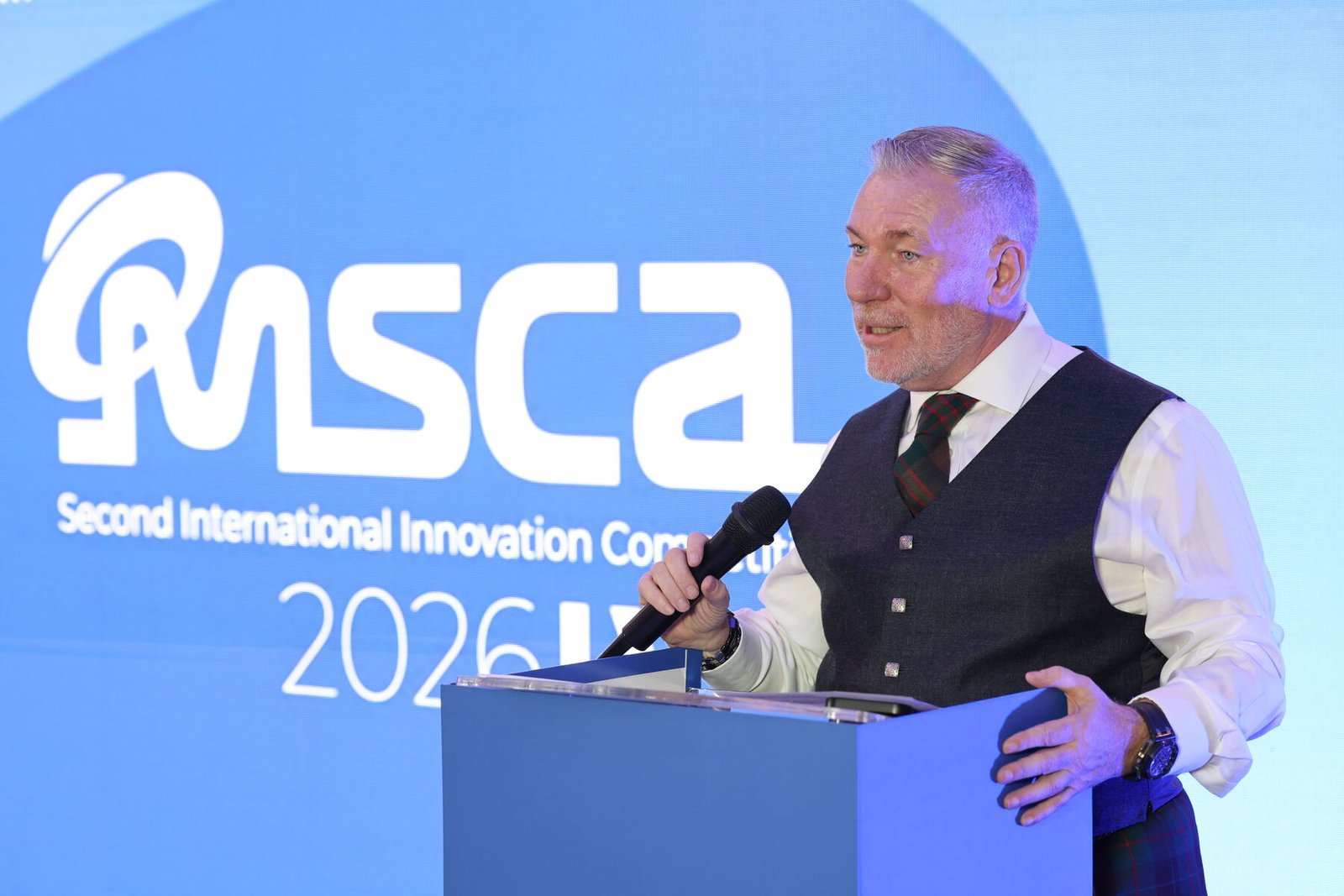
"At first I brought vehicles, and that was real help for the country. But I realised it was very much one-off help. I saw how many smart people there are in Ukraine and decided to invest in their ideas. It matters for your country, and it matters for me. So next year we will keep doing this."
Stuart Ford, co-founder, Melville Sikorsky Challenge Accelerator
Denys Kurbatov, Deputy Minister of Education and Science of Ukraine, confirmed that the Melville Sikorsky Challenge Accelerator matters for the whole of Ukraine.
"This event matters because it is practical: it offers startups a real path from a scientific idea to a prototype, an investor and the market. The Accelerator has to prove that university science can become a successful technology business. Cyber security, artificial intelligence and the restoration of water resources are strategic areas for our country."
Denys Kurbatov, Deputy Minister of Education and Science of Ukraine
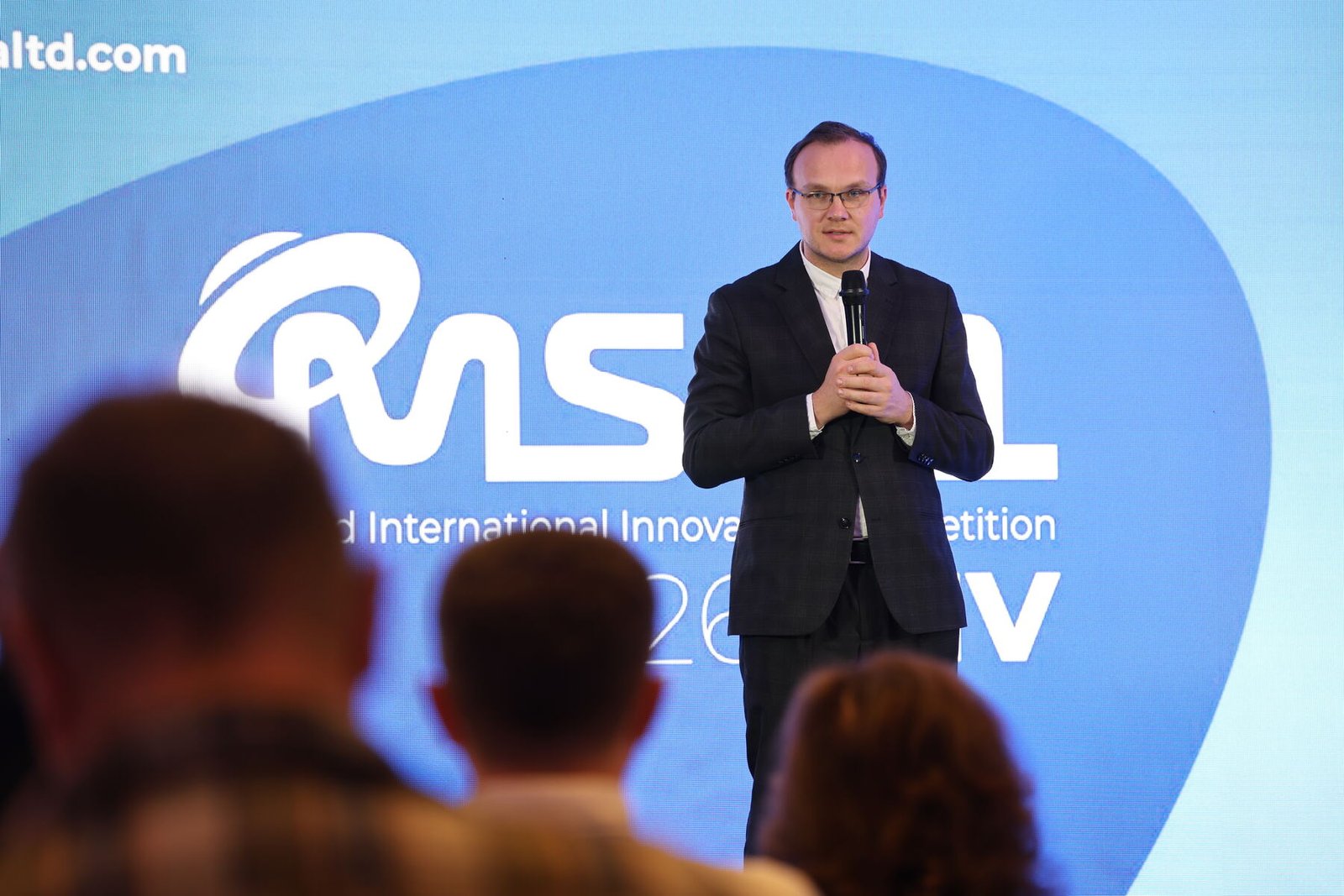
Andriy Moskalenko, First Deputy Mayor of Lviv, recalled that in 2022 Lviv lived through one of the largest cyberattacks ever mounted on a city. The enemy tried to steal data and block accounts; thanks to the team's preparation, the Russians achieved barely 4% of what they intended. So the city hosting the competition understands very well how much cyber security matters.
"We have to develop every day, because every month we record more than 15,000 threats to city services. It would be great to see all of today's winning products in use in our city and across the whole country. There is strong demand for them."
Andriy Moskalenko, First Deputy Mayor of Lviv
Also present was veteran Oleksandr "Teren" Budko, who was seriously wounded in the war in 2022 and lost both legs.
"In wartime the easiest thing to say is 'not now'. But that time may never come. So don't wait for the perfect moment. Start this very second. I want us to remember this time ten years from now not only as the time Ukraine held out, but as the time it created something new."
Oleksandr "Teren" Budko, veteran
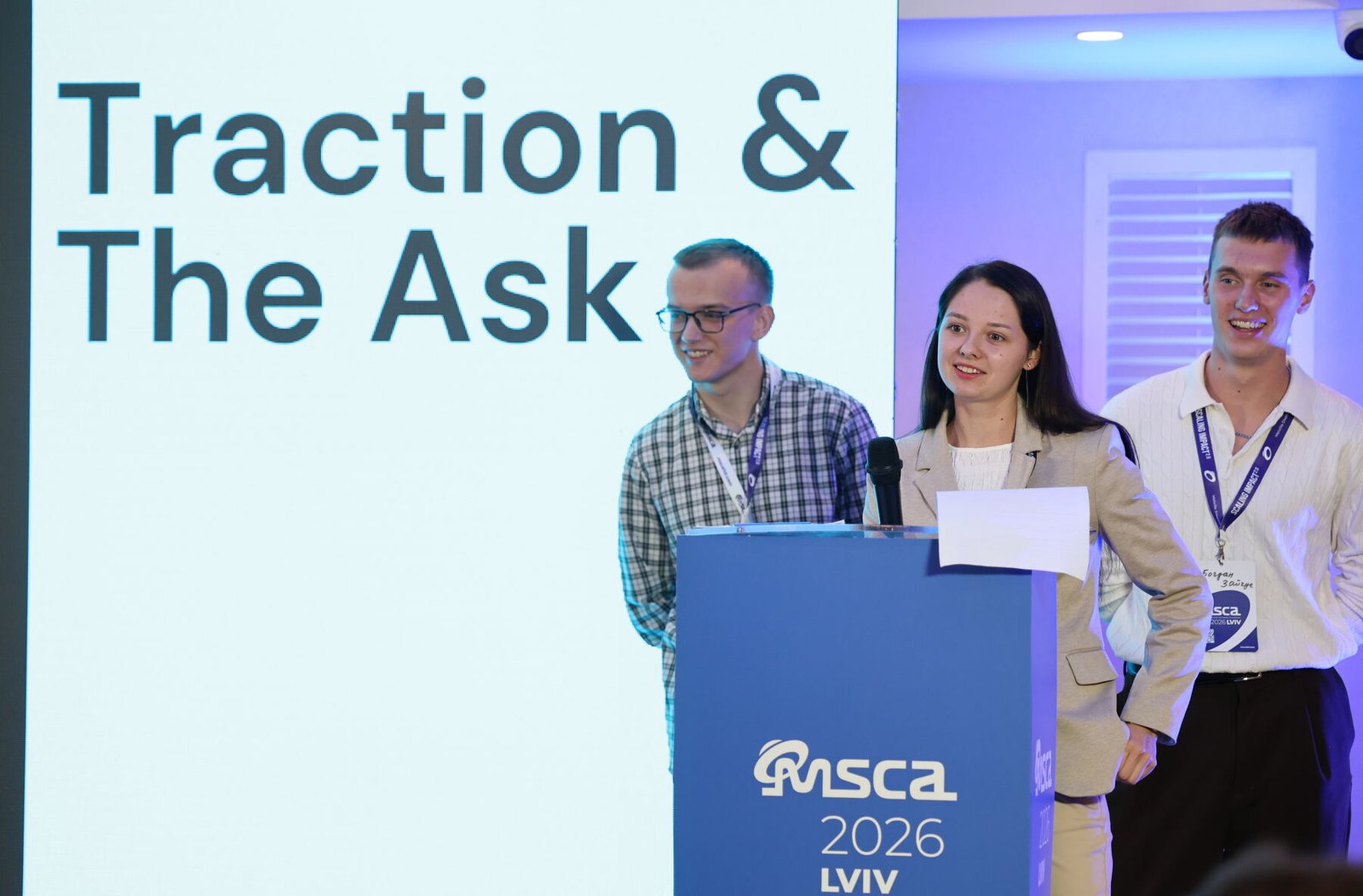
Participants were pleased both with the wins and with taking part. For many teams it was their first serious appearance before investors: they learned how to present an idea and which data investors are missing. The winners said the prize will let them scale their projects and reach a wider circle of customers.
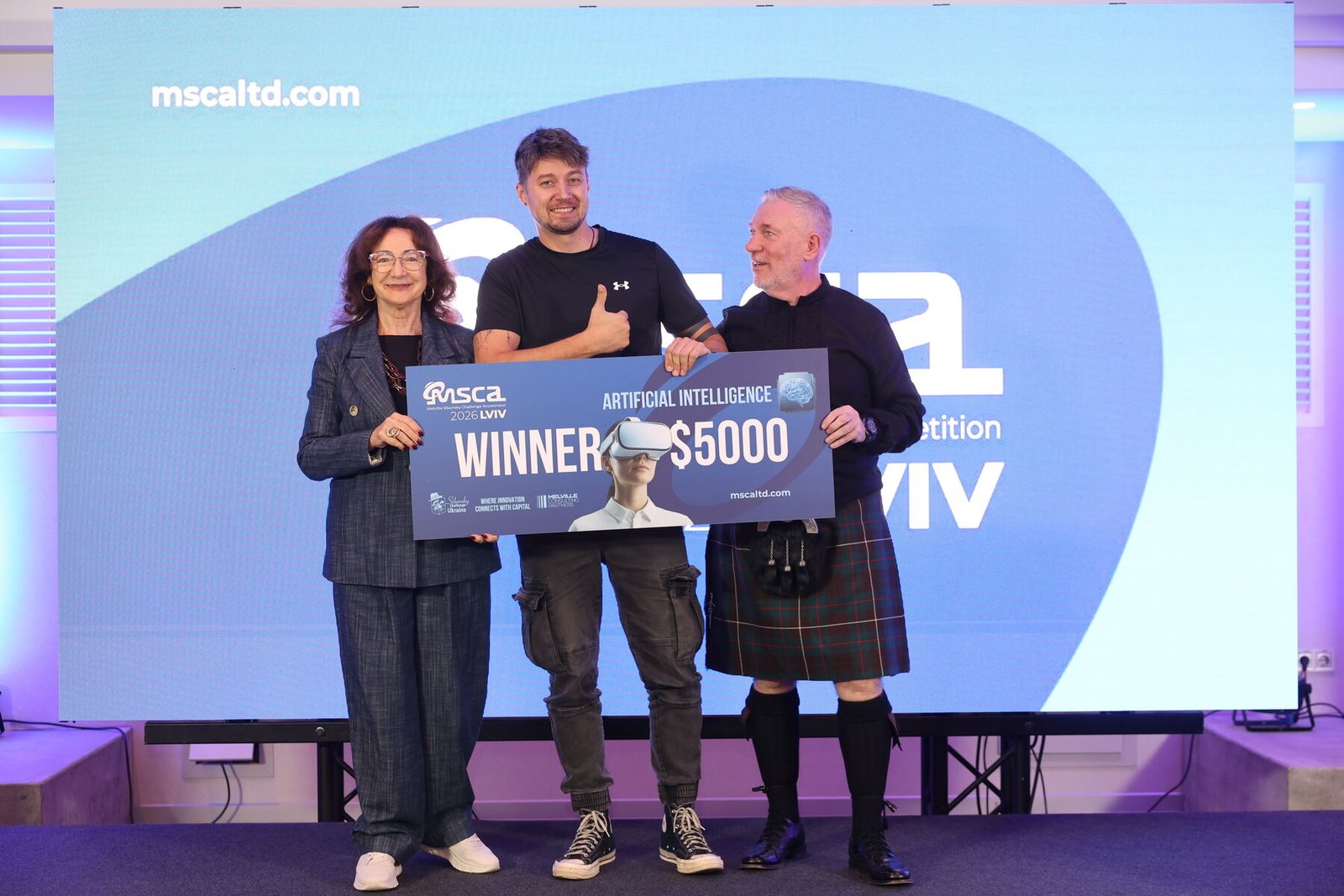
Winners of the Melville Sikorsky Challenge Accelerator 2026
Skadi
A personal AI companion that keeps its memory of the owner directly on the device, so personal data is never passed to the developer or the cloud. Users can talk to Skadi without an internet connection; the assistant remembers the context of past conversations and gradually learns to work with its owner. Its first application is assisting operators of ground control stations: Skadi holds the mission context, takes over routine tasks and learns from the human. In future the technology is planned for home systems and humanitarian robots.
OckhaMe
A platform that automatically tests web applications for vulnerabilities using AI that runs locally. Such testing is rarely automated today because conventional tools do not understand the complex logic of websites and services. OckhaMe builds a compact "map" of the application that combines its structure, potential attack points and test results without losing important context. To keep the AI from making mistakes, the work is split between several specialised agents, while a central orchestrator module ensures the model performs only the current task.
Telesto
A system for continuous monitoring of water quality in rivers, lakes, canals, water intakes and urban networks. Reagent-free sensors measure nitrates, turbidity, temperature and other indicators, and the data is shown in real time on an online platform with maps and alerts. This makes it possible to detect pollution quickly and track how it spreads. The team has been working on the technology for more than three years and has completed laboratory and field trials. Next come certification, preparation for production and deployment of networks in cities and entire river basins.
Beyond the prize fund
The competition gave teams more than a chance to compete for the prize fund. Three more teams found companies ready to support their projects with grants and help them scale further, and six projects were selected to continue negotiations on investment offers.
Grant offers
Companies ready to back these projects with grants and support their further scaling.
- Impact
- Aqua Cerama
- Oryon Technology
Investment negotiations
Selected to continue talks on investment offers.
- 44 NIDS-Core
- VR Mentality
- BAN-ONE PLATFORM
- ZENGARD LOCUS
- Genera AI software for fashion
- HYDRATICO
This is the second such competition in Lviv. The first, held in spring, attracted more than 100 applications; 44 teams reached the final, and three winners also received $5,000 each. Four teams were awarded grants of $5,000 to $11,000, and several teams are working with the organisers on attracting investment and scaling their solutions. The organisers have announced that the competitions will continue next year.