Melville Sikorsky
Challenge Accelerator

The Next Event: Lviv · September 2026

Kyiv, Ukraine | May 6, 2026

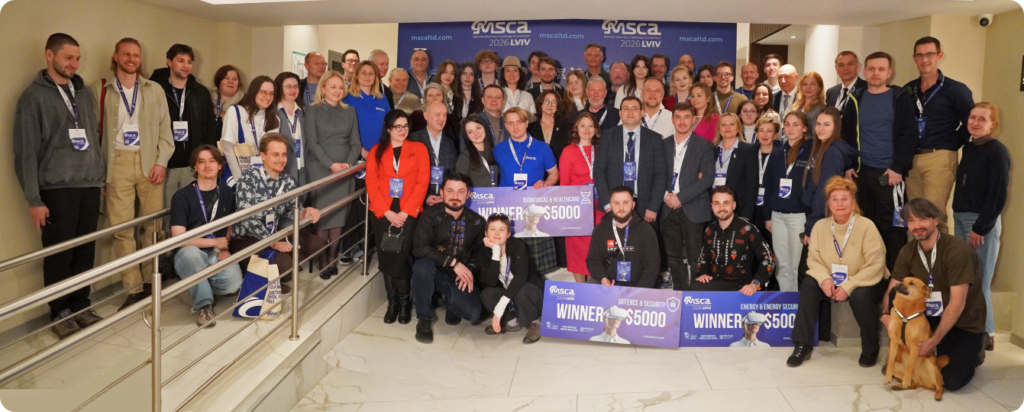
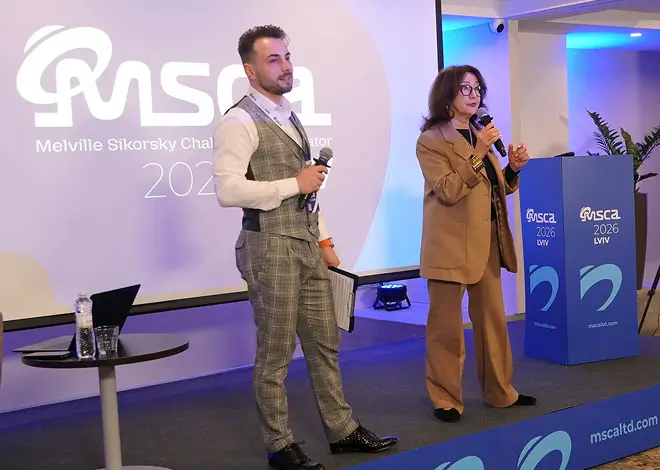
The first international competition MSCA Lviv 2026, organized by the Melville Sikorsky Challenge Accelerator (MSCA), was successfully held in Lviv, bringing together innovators, investors, experts, universities, and companies from around the world.

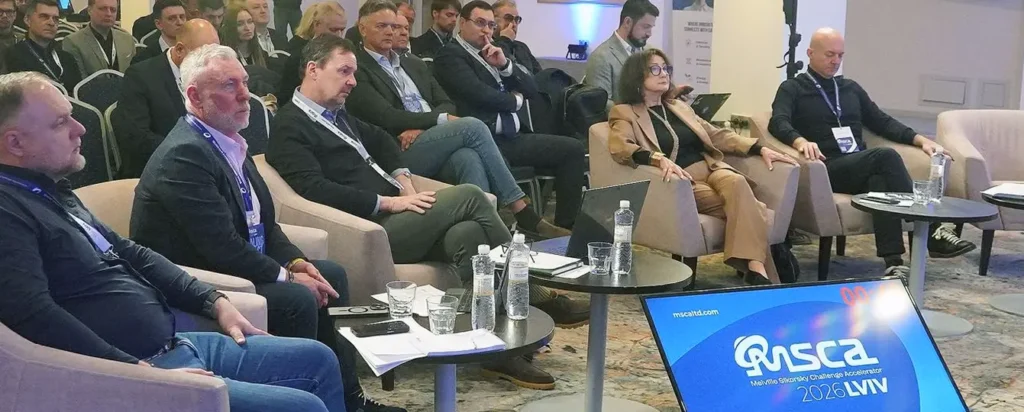
The event was conducted in English and featured startup pitching, prototype demonstrations, expert discussions, and investor meetings.

Key Results

A strong international response, with 44 finalists selected from 126 applications.

  • 126 applications submitted
  • 44 finalist teams
  • 42 projects presented at the final
  • Participants from 14 countries
  • 130 total participants (96 offline, 34 online)

Strategic Tracks

Focused areas shaped around security, healthcare, and resilient energy infrastructure.

  • Defense & Security
  • Biomedical Engineering & Health
  • Renewable Energy & Energy Security

Innovation Highlights

Practical technologies designed for wartime needs, recovery, and long-term resilience.

  • Defense technologies (demining, robotics, counter-UAV)
  • Healthcare innovations (diagnostics, rehabilitation, devices)
  • Energy solutions (resilience, waste-to-energy, storage systems)

Our Winners

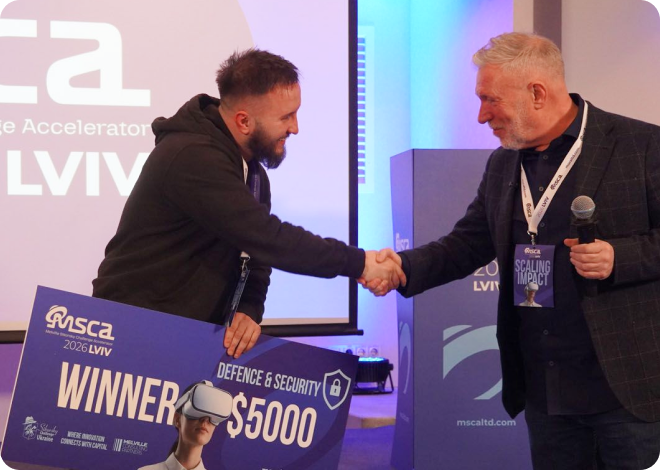
Defense & Security

Prize: $5,000

Biomedical Engineering & Health

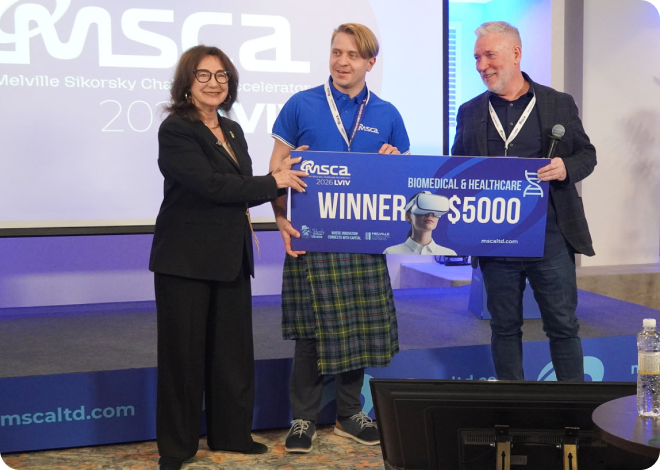
Prize: $5,000

Renewable Energy & Energy Security

Prize: $5,000

Additional investor interest was noted in multiple finalist projects, including ALLIGATOR boiler (Ukraine).

Angel investments were also announced for:

These meticulously designed, fully furnished offices offer an exclusive, secure environment, fostering a sophisticated atmosphere for focused work. Success begins at WorkScape.

Investment & Acceleration

MSCA will continue working with selected teams through acceleration programs and investor matchmaking.

Terms include:

3% success fee on investments raised

5% equity for startups (or negotiated terms for growth-stage companies)

What’s Next

The next MSCA competition is scheduled for September 2026, with a focus on three urgent innovation areas:

Protecting critical systems, infrastructure, and data in high-risk environments.

Applying AI to security, productivity, decision-making, and scalable innovation.

Supporting technologies that protect, restore, and manage essential water systems.